
Roll-Up Reality
Why Most Platforms Fail After Acquisition #3

Roll-ups look easy on paper.
Buy a platform.
Add tuck-ins.
Scale fast.
Exit big.
And yet most roll-ups don’t collapse on the first deal.
They collapse after the third.
That’s when complexity compounds, cracks widen, and the story breaks.
Here’s why most platforms fail right there and what the survivors do differently.
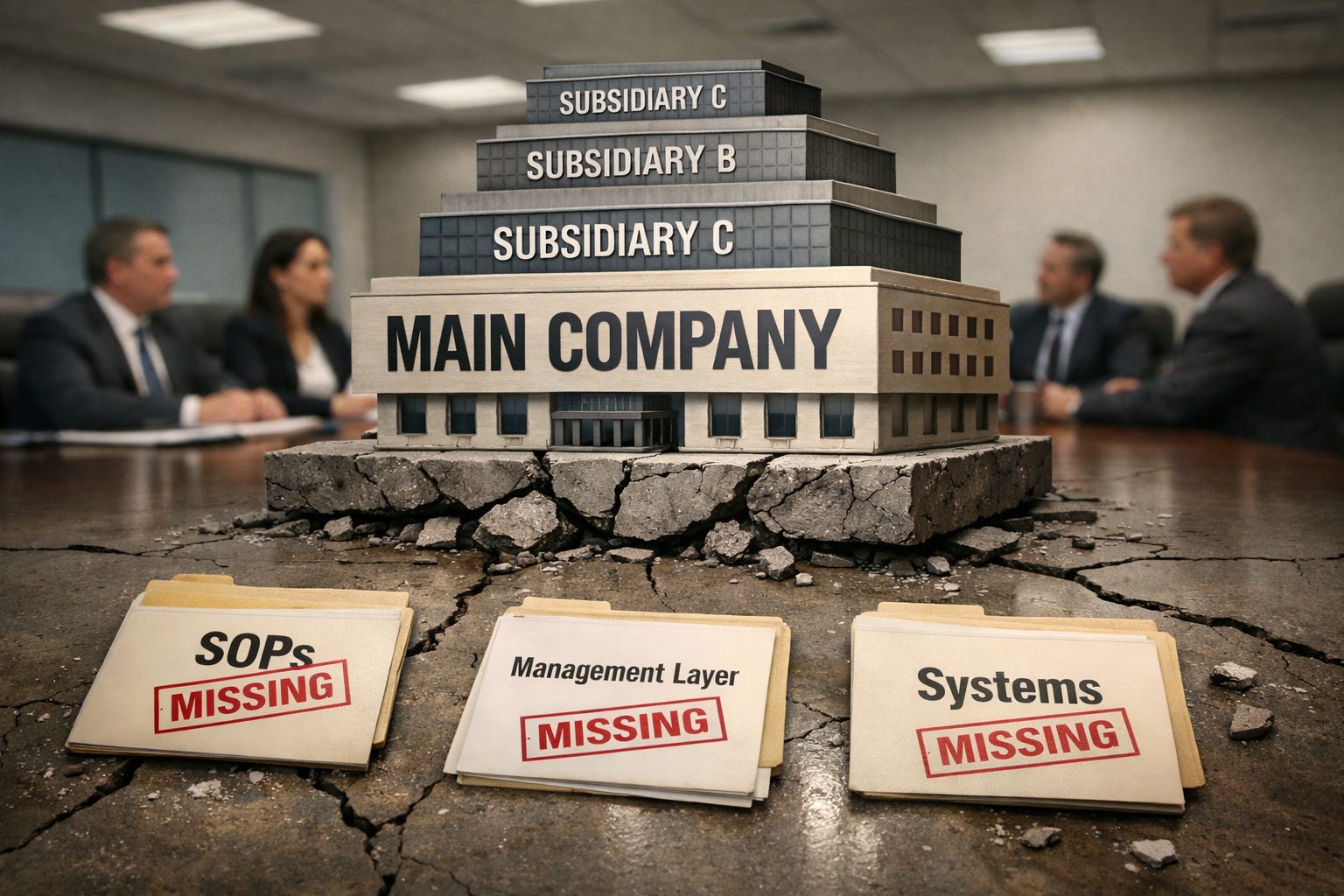
1️⃣ The Platform Was Never a Platform
Most “platforms” are just owner-operated businesses with size.
They have revenue.
They have EBITDA.
But they don’t have infrastructure.
By acquisition #3, the truth shows up:
no standardized processes
no real middle management
no integration muscle
no repeatable playbook
A real platform absorbs businesses.
A fake one gets overwhelmed by them.
If the first company can’t run without the founder, it can’t carry others.
2️⃣ Integration Debt Compounds Faster Than Financial Debt
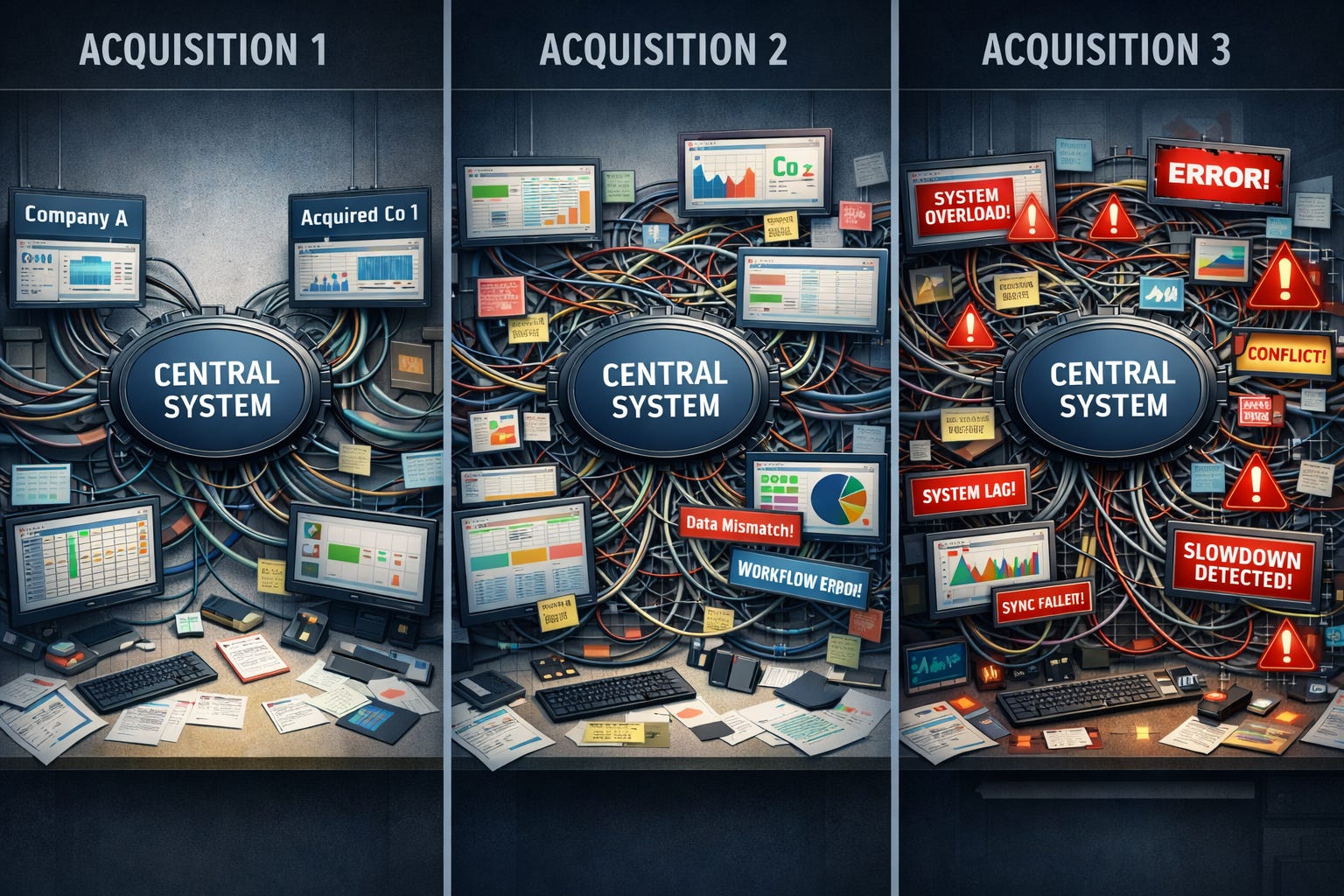
Every acquisition creates integration work:
systems alignment
payroll harmonization
reporting standards
cultural blending
decision rights
Most buyers ignore this and keep buying anyway.
By deal #3, integration debt exceeds operating capacity.
Things slow.
Mistakes multiply.
Good people leave.
You didn’t build a roll-up.
You built a fragile stack.
Growth without integration discipline is just delayed failure.
3️⃣ Culture Breaks Before Cash Flow Does
Here’s the silent killer.
Each acquired business brings:
its own habits
its own incentives
its own norms
its own unspoken rules
Founders assume culture will “figure itself out.”
It won’t.
By the third acquisition:
managers resist change
teams stop trusting leadership
accountability gets blurry
performance becomes inconsistent
Buyers don’t lose deals because of spreadsheets.
They lose them because culture stops executing the plan.

4️⃣ The Operator Becomes the Bottleneck Again
Roll-ups are supposed to reduce dependency.
Instead, many buyers recreate it at scale.
The operator:
approves every decision
resolves every conflict
closes every fire
knows every exception
By acquisition #3, the operator is back in the weeds only now across multiple companies.
The business didn’t scale.
The stress did.
If everything routes through you, nothing is scalable.

5️⃣ Capital Structure Gets Ahead of Capability
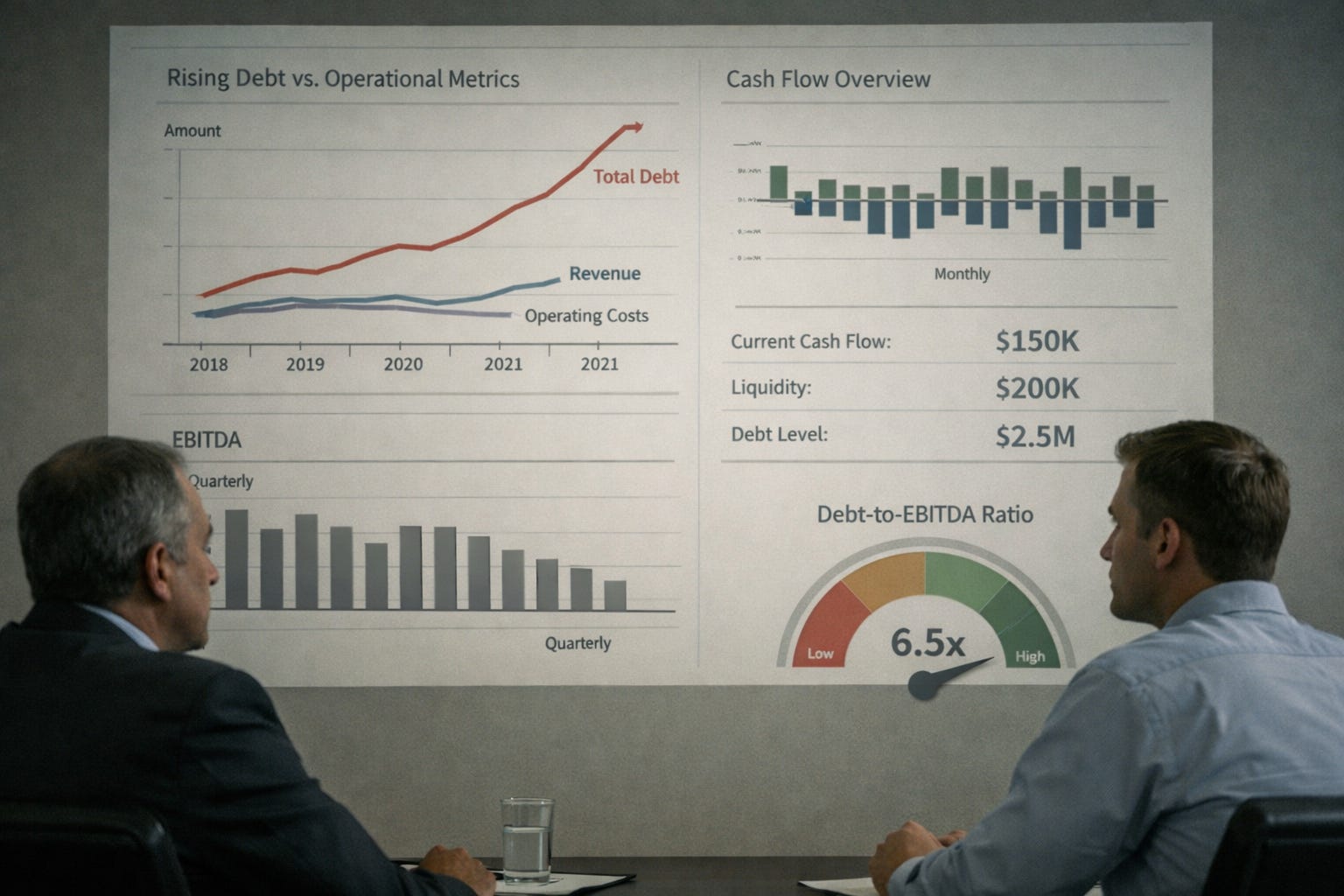
Debt is easy early.
Banks love momentum.
Sellers carry notes.
Everyone believes the story.
Then execution lags.
By the third deal:
debt service tightens
covenants matter
mistakes become expensive
flexibility disappears
Leverage only works when operations are boring and predictable.
Chaos plus leverage equals collapse.
Most roll-ups fail not because they bought bad businesses
but because they bought them too fast.
Final Thought – Roll-Ups Don’t Fail From Lack of Deals
They fail from lack of discipline.
Acquisition #3 is where fantasy meets reality.
Where systems matter more than sourcing.
Where leadership replaces hustle.
Where patience beats speed.
The winners slow down there.
They integrate.
They professionalize.
They earn the right to buy again.
Because in roll-ups, survival isn’t about how many companies you buy —
it’s about how well you absorb them.
💼 If this changed how you think about roll-ups:
Share it with someone chasing a platform.
And subscribe to Buy Build Exit real lessons from operators who’ve been through the fire.
👉 Subscribe here | Real platforms. Real integration. Real outcomes.