
The Capital Stack Mistake That Shrinks Your Take-Home
How structure quietly matters more than headline price.

Most founders obsess over one number:
The purchase price.
They negotiate hard.
They compare multiples.
They anchor on valuation.
Then they sign a deal… and realize too late:
The headline number wasn’t the number that mattered.
Because in M&A, the capital stack decides what you actually take home.
And if you don’t understand it, you can “win” the negotiation and still lose millions.
Here’s how that happens.
1️⃣ Price Is Public. Structure Is Private.
Two founders sell for $10M.
One walks with $9.5M at close.
The other walks with $3M… and a promise.
Same price.
Different capital stack.
The difference lives in:
• earnouts
• seller notes
• equity rollovers
• holdbacks
• working capital adjustments
The press release says $10M.
The wire says something very different.
💡 Rule:
Price is marketing. Structure is math.

2️⃣ Earnouts Quietly Shift Risk Back to You
Earnouts sound attractive.
“Upside participation.”
“Aligned incentives.”
“Performance bonus.”
But they move risk from buyer to seller.
If:
• targets are aggressive
• performance depends on new ownership
• integration disrupts revenue
• working capital shifts
Your earnout becomes theoretical.
You didn’t sell the business.
You refinanced your risk.
💡 Rule:
If your payout depends on post-sale performance, you’re still carrying exposure.
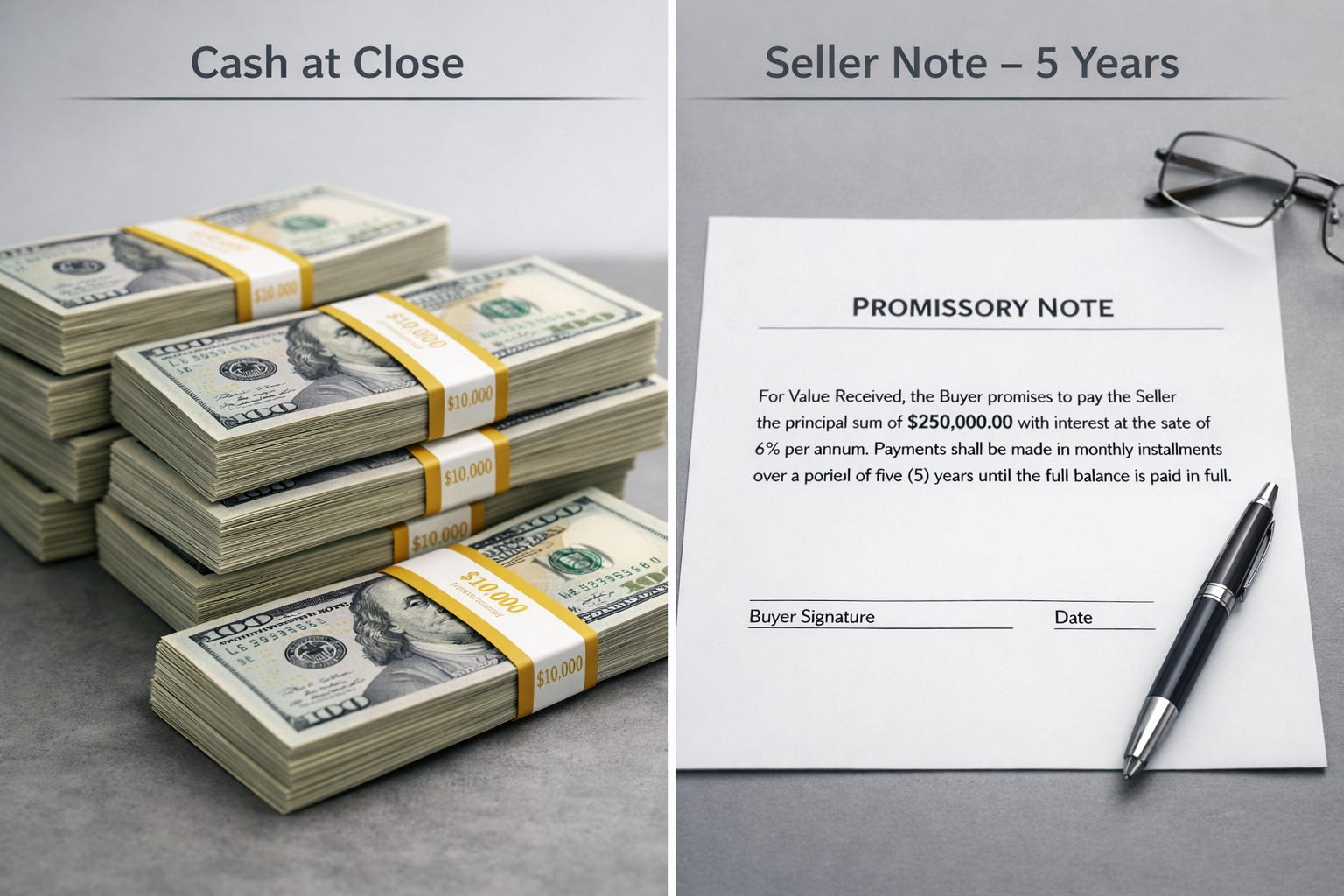
3️⃣ Seller Notes Reduce Immediate Liquidity
Seller financing can be strategic.
But it changes your take-home immediately.
Instead of cash, you hold paper.
That paper carries:
• default risk
• performance risk
• refinancing risk
• timeline uncertainty
A $2M seller note is not $2M in your account.
It’s conditional capital.
💡 Rule:
Deferred money is discounted money.

4️⃣ Equity Rollovers Sound Sexy Until You Model the Exit
Private equity loves rollovers.
“Stay in the upside.”
“Second bite of the apple.”
Sometimes that works.
Sometimes it doesn’t.
If the next exit is delayed, underperforms, or restructures capital, your equity can be diluted or repriced.
Rollover equity is leverage.
Leverage magnifies returns.
It also magnifies disappointment.
💡 Rule:
Rollover equity is a bet not a bonus.
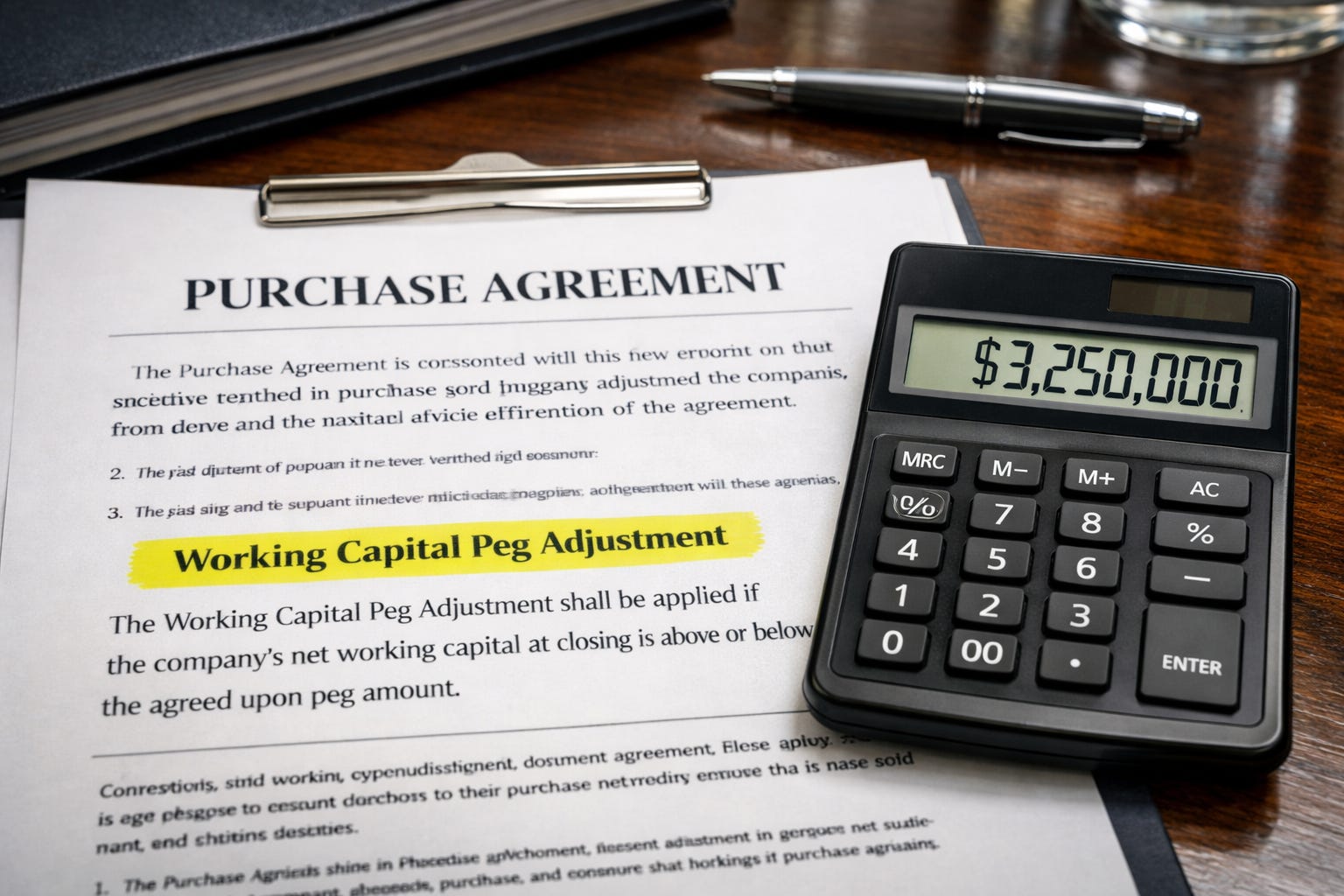
5️⃣ Working Capital Adjustments Steal Quietly
Here’s the silent killer.
Working capital pegs.
If your balance sheet isn’t optimized before close, buyers adjust purchase price based on:
• receivable timing
• payable normalization
• inventory targets
You might think you’re selling for $10M.
After working capital adjustments, it’s $9.2M.
No drama.
Just math.
💡 Rule:
Your balance sheet on closing day determines your real exit value.

The Invisible Equation
Headline Price
– Earnouts
– Seller Notes
– Holdbacks
– Working Capital Adjustments
– Equity Risk
= Actual Take-Home
That’s the number that matters.
Not the announcement.
Not the multiple.
The wire.
Final Thought Negotiate Structure Before You Celebrate Price
Sophisticated sellers negotiate:
• cash at close
• earnout mechanics
• seller note protections
• working capital clarity
• rollover governance
Amateurs celebrate valuation.
Professionals protect take-home.
Because structure quietly shapes wealth long after the headline fades.
💼 If this sharpened your lens:
Share it with a founder bragging about price instead of payout.
And subscribe to Buy Build Exit where we break down the math behind real exits.
👉 It’s not what you sell for. It’s what you actually keep.